Digital twin for transporting organic materials
Optimizing the transport chain for organic materials is a key challenge for the development of greener, more sustainable cities. The digital twin contributes to this challenge.
Quebec generates significant quantities of organic matter. In fact, 4.4 million tonnes of residual materials are produced every year (excluding the agri-food sector). Faced with the challenges posed by these materials in terms of groundwater contamination, destruction of the agricultural landscape and greenhouse gas emissions, the aim is to increase the proportion of recycled organic materials. To achieve this, this project aims to design a decision-support tool to improve collection, transport and processing strategies for these materials.
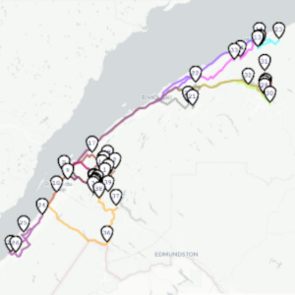
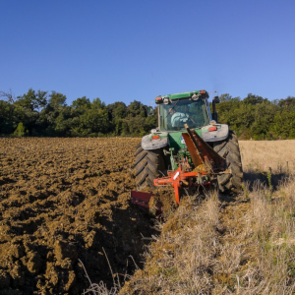
Initially part of the Optim-O project, initial work was carried out on the design of geospatial algorithms for optimizing the collection of residual organic materials. In particular, the aim was to optimize transport from various customers to treatment plants and from treatment plants to digestate and compost customers (agricultural fields). Now, the aim is to make these algorithms available for decision-making by means of a digital territory twin.
In partnership with the Réseau de Recherche en Economie Circulaire du Québec (RRECQ), this digital twin design project focuses on the Quebec City region. It aims to visualize, via a 3D interface, several alternatives for transporting organic materials, in order to support local collection and processing strategies.